Introduction: The Crucial Link Between Study Environment and Exam Success
Alright, lah! Let's talk about how to make sure your Secondary 3 kid aces those Math exams. In Singapore, Math isn't just about numbers; it's the foundation for everything, from engineering that next iconic skyscraper to coding the AI that's gonna change the world. And let's be real, with AI becoming more and more prevalent, understanding the logic behind the algorithms is now more important than ever. In today's fast-paced educational environment, many parents in Singapore are hunting for effective ways to enhance their children's grasp of mathematical ideas, from basic arithmetic to advanced problem-solving. Building a strong foundation early on can significantly elevate confidence and academic performance, assisting students conquer school exams and real-world applications with ease. For those investigating options like secondary 3 math it's crucial to focus on programs that emphasize personalized learning and experienced support. This strategy not only addresses individual weaknesses but also cultivates a love for the subject, resulting to long-term success in STEM-related fields and beyond.. We want our kids to be future-proof, right? So, let's dive into creating the perfect study environment to help them kiasu their way to success!
Study Environment Checklist for Exam Preparation
Okay, imagine this: your kid is trying to solve a quadratic equation while your neighbour is having a karaoke session. Siao liao! (Translation: Crazy!) That's why the study environment is so crucial. Here's a checklist to make sure their study space is shiok (Translation: Awesome) and conducive for learning:
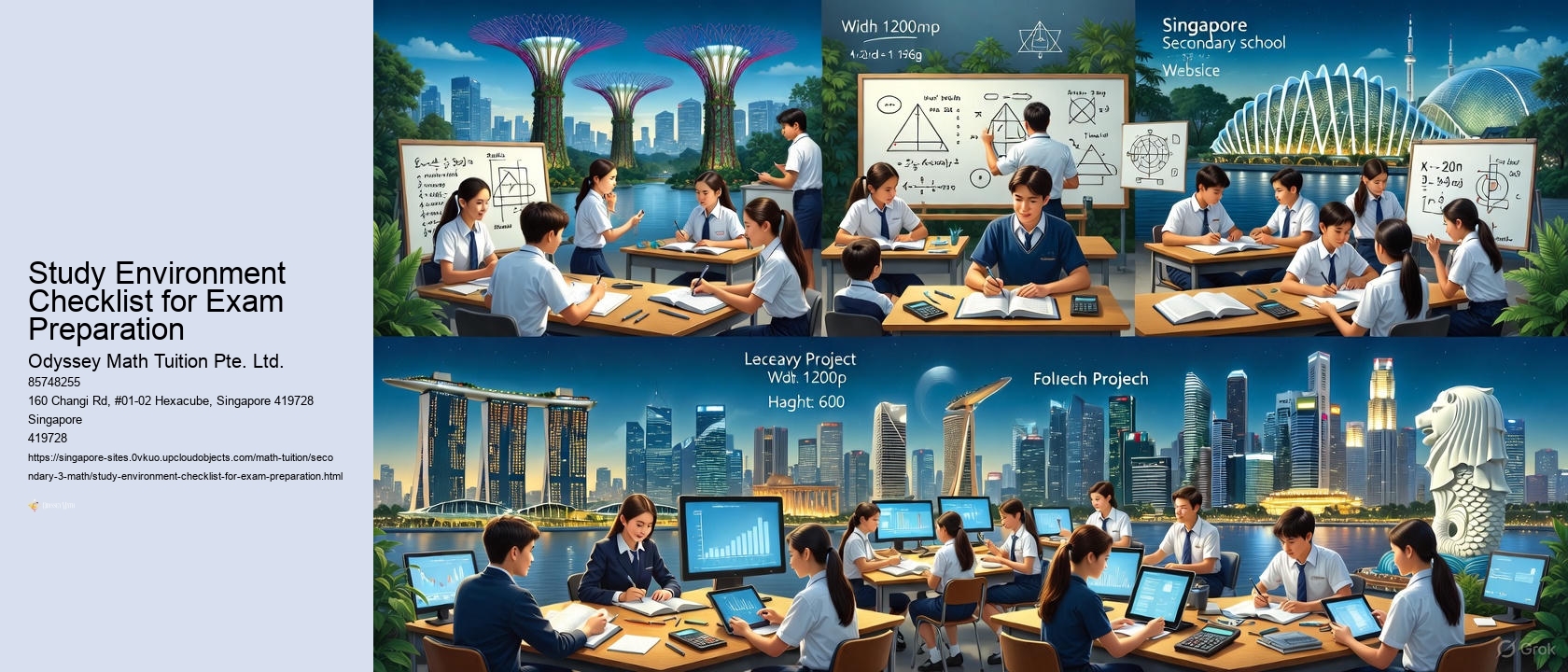
Dedicated Study Zone: This isn't just a corner of the dining table. It needs to be their space, a place where their brain automatically switches into "study mode."
Minimal Distractions: No TV, no noisy siblings, and definitely no TikTok notifications popping up every five seconds. Silence is golden, especially when tackling simultaneous equations.
Ergonomic Setup: Good posture is key! Make sure they have a comfortable chair and a desk at the right height. We don't want them developing back problems before they even graduate!
Good Lighting: Proper lighting prevents eye strain and keeps them alert. Natural light is best, but a good desk lamp will do the trick too.
Organized Workspace: Everything should have its place. Textbooks, notes, stationery – all neatly organized and within easy reach. A cluttered space equals a cluttered mind, kan cheong (Translation: Anxious) already!
Tools and Resources: Make sure they have all the necessary tools – calculator, protractor, ruler, etc. Nothing is more frustrating than having to hunt for a ruler in the middle of solving a geometry problem.
Creating a Conducive Study Environment
It's not just about the physical space; it's about the overall atmosphere. Here's how to create a study environment that fosters focus and productivity:
Communication is Key: Talk to your child about their study needs and preferences. What works for one student might not work for another.
Establish a Routine: Consistency is crucial. In Singapore's high-stakes education system, where educational success is paramount, tuition typically refers to supplementary extra lessons that offer specific guidance outside school programs, helping pupils conquer subjects and get ready for key tests like PSLE, O-Levels, and A-Levels during strong pressure. This non-public education field has developed into a lucrative business, powered by guardians' investments in tailored guidance to close knowledge deficiencies and enhance performance, even if it commonly increases burden on adolescent kids. As machine learning surfaces as a transformer, delving into advanced online tuition approaches shows how AI-powered systems are personalizing educational journeys internationally, offering responsive mentoring that surpasses traditional techniques in effectiveness and participation while tackling international learning disparities. In Singapore particularly, AI is disrupting the traditional tuition approach by allowing affordable , on-demand applications that correspond with national curricula, possibly lowering expenses for families and improving outcomes through analytics-based information, although ethical considerations like heavy reliance on technology are discussed.. Set a regular study schedule and stick to it as much as possible.
Breaks are Important: Encourage them to take regular breaks to avoid burnout. A short walk, a quick snack, or some stretching can do wonders.
Parental Support: Show your support and encouragement. Let them know you're there for them, even if you can't help them with the Math itself. A simple "Jiayou!" (Translation: Add oil! In the challenging world of Singapore's education system, parents are ever more intent on equipping their children with the abilities needed to thrive in intensive math programs, covering PSLE, O-Level, and A-Level preparations. Recognizing early signals of struggle in areas like algebra, geometry, or calculus can bring a world of difference in fostering strength and proficiency over advanced problem-solving. Exploring trustworthy math tuition Singapore options can deliver customized guidance that aligns with the national syllabus, making sure students gain the advantage they want for top exam scores. By prioritizing interactive sessions and regular practice, families can assist their kids not only satisfy but go beyond academic standards, clearing the way for prospective opportunities in competitive fields.. or You can do it!) can go a long way.
Subtopic: The Power of Positive Reinforcement: Celebrate their successes, no matter how small. Acknowledge their effort and progress.
Subtopic: Minimizing Stress: Exam stress is a real thing. Help them manage their stress levels by encouraging relaxation techniques like deep breathing or meditation.
Fun Fact: Did you know that Singapore Math is famous worldwide? Our emphasis on problem-solving and critical thinking has made our students some of the top performers in international Math competitions.
How to Excel in Singapore Secondary 3 Math
Alright, let's get down to the nitty-gritty. How can your child truly excel in Secondary 3 Math? Here are some tips:
Master the Fundamentals: Make sure they have a solid understanding of the basic concepts. A strong foundation is essential for tackling more complex topics.
Practice, Practice, Practice: Math is all about practice. The more problems they solve, the better they'll become.
Seek Help When Needed: Don't be afraid to ask for help. Whether it's from a teacher, tutor, or classmate, getting clarification on difficult concepts is crucial. This is where quality tuition can make a real difference, offering personalized attention and targeted support.
Understand the "Why," Not Just the "How": Encourage them to understand the underlying principles behind the formulas and methods. Rote memorization won't get them far.
Past Papers are Your Friend: Familiarize themselves with the exam format and types of questions by working through past papers. This is a great way to identify areas where they need to improve.
Interesting Fact: The Singapore education system has evolved significantly over the years. From a focus on rote learning to an emphasis on critical thinking and problem-solving, we've come a long way in preparing our students for the future.
The Future is Math
Let's face it – Math is the language of the future. From AI and data science to finance and engineering, Math skills are in high demand. By helping your child excel in Math, you're not just helping them pass an exam; you're setting them up for a world of opportunities. So, create that conducive study environment, encourage them to practice, and remind them that "can or not, also must try!" (Translation: Whether you think you can or not, you still have to try!)
History: Our focus on STEM (Science, Technology, Engineering, and Mathematics) education has its roots in Singapore's drive for economic development. Recognizing the importance of technology and innovation, the government has invested heavily in STEM education to ensure that our students are equipped with the skills needed to succeed in the 21st century.
By following these tips, you can help your Secondary 3 child create a study environment that fosters focus, productivity, and ultimately, exam success. Good luck, and majulah Singapura! (Translation: Onward Singapore!)
How can I minimize distractions in my study environment?
Designate a quiet, clutter-free space, turn off notifications on devices, and inform family members of your study schedule to minimize interruptions.
What is the ideal lighting for a study area?
Opt for natural light if possible, and supplement with a balanced mix of task lighting (like a desk lamp) and ambient lighting to reduce eye strain.
What role does ergonomics play in a study environment?
Ensure your chair provides good back support, your desk is at the right height, and your monitor is positioned to prevent neck strain and promote good posture.
How important is temperature control in a study space?
Maintain a comfortable temperature to avoid feeling too hot or too cold, as extreme temperatures can negatively impact concentration and focus.
Should I allow background noise while studying?
Some students find white noise or ambient music helpful, but avoid distracting sounds like loud music or television. Experiment to find what works best for you.
How can I organize my study materials efficiently?
Use folders, binders, and labels to categorize notes, textbooks, and assignments. Keep frequently used items within easy reach to minimize wasted time.
What is the best way to incorporate breaks into my study routine?
Schedule short breaks every hour to stretch, walk around, or do something relaxing. This will help prevent burnout and improve focus when you return to studying.
How does personalization affect the study environment?
Adding personal touches like plants, motivational quotes, or comfortable seating can make the space more inviting and conducive to studying.
Can the location of my study space impact my concentration?
Yes, choose a location that is free from high-traffic areas and distractions. A dedicated study room or quiet corner can significantly improve concentration levels.